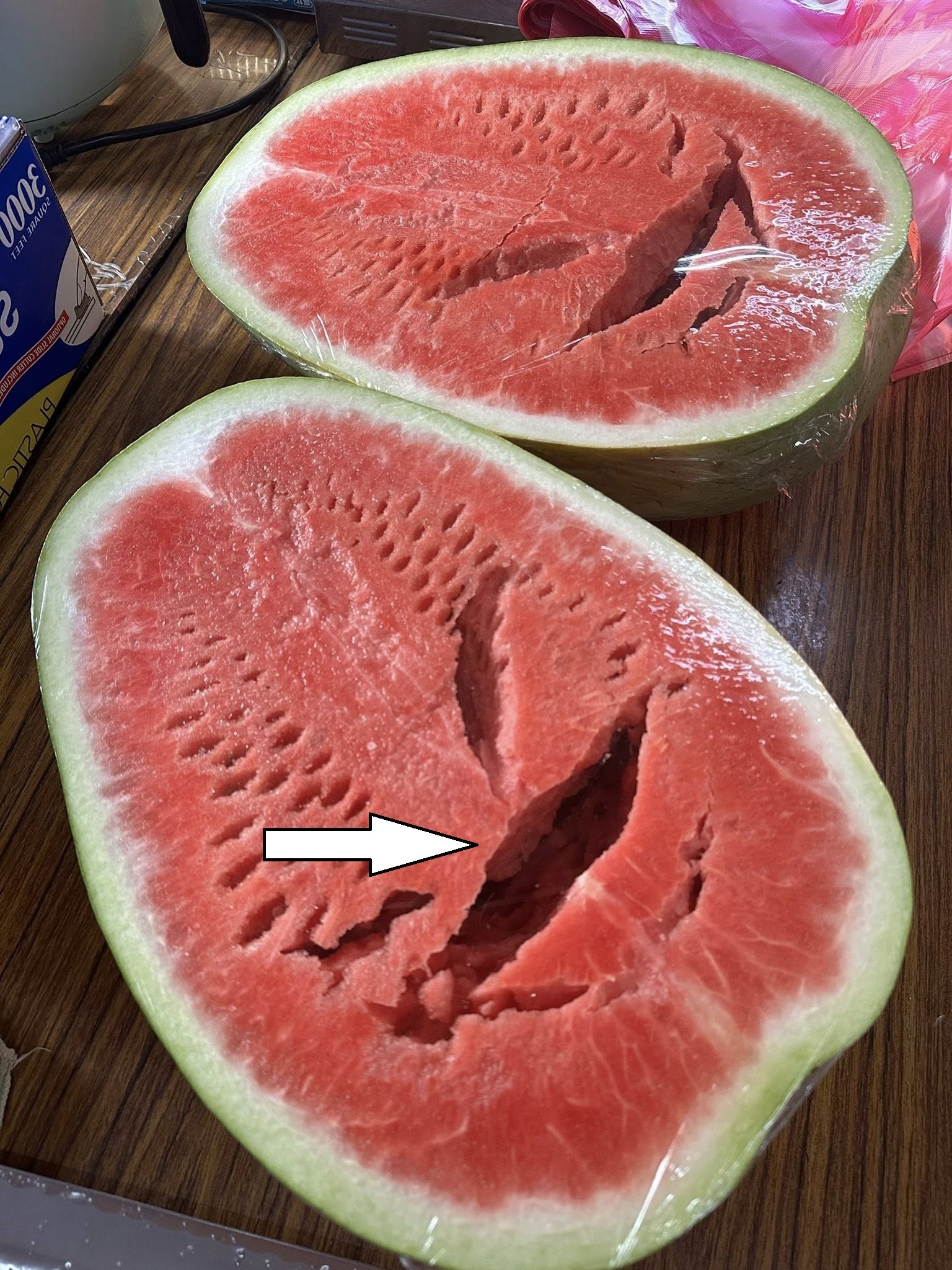
Attention, a watermelon with cracks inside — this is not just an aesthetic defect!
Did you know that a watermelon with grooves, cracks, or a loose fleshy part may not only be of poor quality, but also dangerous to your health? Let’s find out why it’s not worth taking the risk and how to choose a truly safe and healthy watermelon.
Why do we love watermelons?
Contains 90–92% water — ideal against dehydration
Rich in vitamins A, C and E — supports immunity and youthful skin
Contains antioxidants — helps slow down cell aging
Includes potassium, magnesium, phosphorus and calcium — important for the heart and muscles
Contains citrulline — an amino acid that improves blood circulation and potency
Has a diuretic effect — helps remove excess fluids
What do the cracks in the fleshy part hide?
If you notice longitudinal grooves, cavities, cracks, or soft, spongy areas inside the watermelon, it’s best to throw it away.
Such changes often indicate the use of chlorfenuron , a chemical growth regulator.
What is chlorfenuron?

