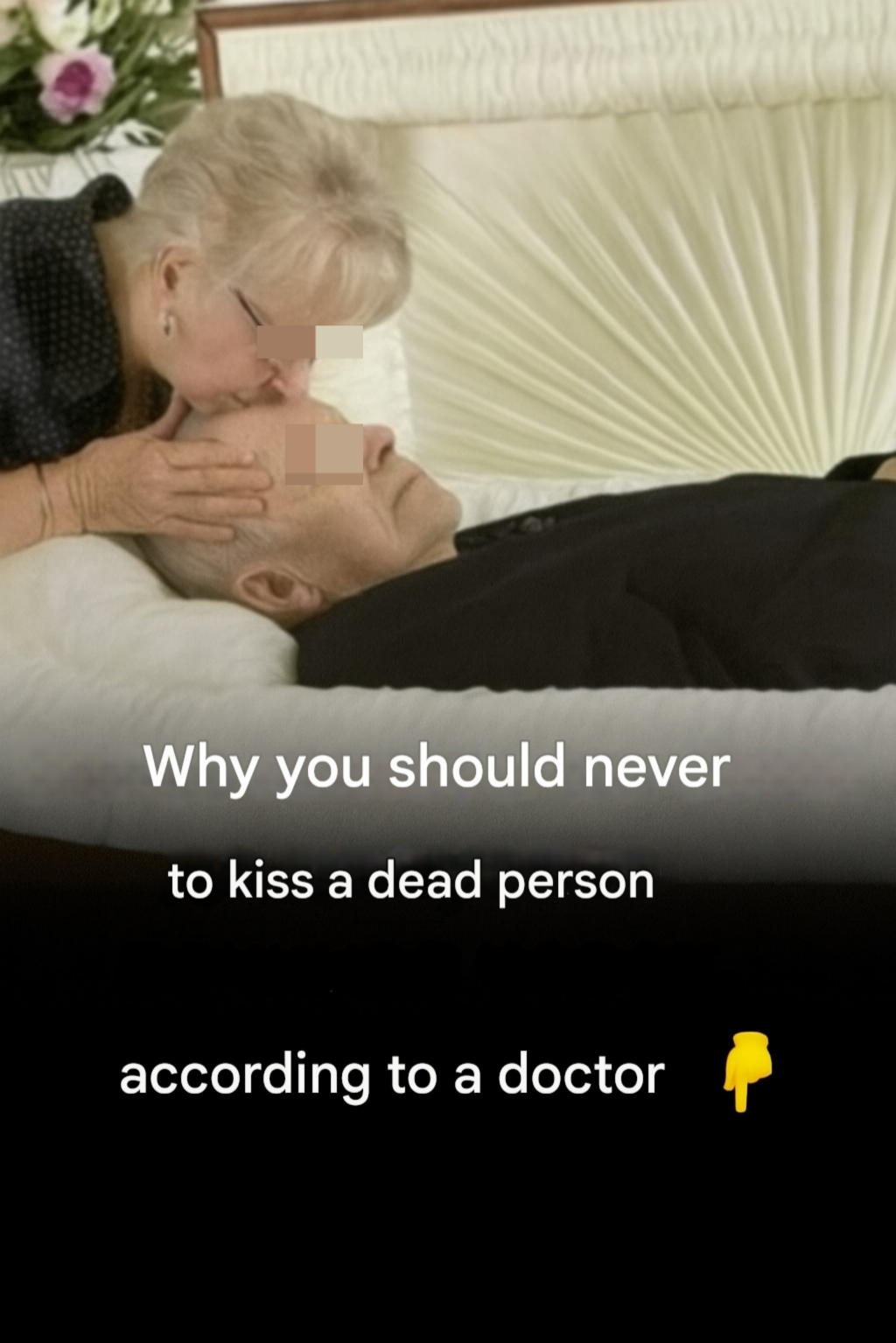
Why some doctors advise against kissing a deceased loved one
In moments of deep grief, physical gestures bring immense comfort. For many, a gentle kiss on the forehead or lips of a deceased person seems the most natural way to say a final “goodbye” – an act of love, closure, and connection.
But while this intimate gesture may seem harmless, some medical professionals warn that it may pose unexpected health risks, especially under certain circumstances.
Below, we’ll look at why some doctors recommend caution, what the possible dangers are, and how families can honor their loved one in a safe way.
 The medical point of view: what happens after death?
After death occurs, the body begins a natural process called autolysis —the breakdown of cells from within. Without oxygen, tissues degrade, and bacteria that the immune system had kept in check multiply rapidly.
Depending on the cause of death and the time elapsed, the body can become a breeding ground for pathogens, for example:
-
Bacteria – Staphylococcus , E. coli , Salmonella
-
Viruses – influenza, hepatitis, HIV, SARS-CoV-2
-
* Mushrooms
These microorganisms are contained in bodily fluids – saliva, nasal secretions, blood – and are transmitted through direct contact, including kissing.
When is the risk higher?
-
Cause of death – infectious diseases (meningitis, tuberculosis, viral infections) increase the risk.
-
Time since death – the longer the body is out of refrigeration, the more bacteria develop.
-
Preparation method – washing, dressing or embalming. Embalming reduces microbial activity.
-
Health of the bereaved – people with weakened immunity, pregnant women, young children and the elderly are more vulnerable.

