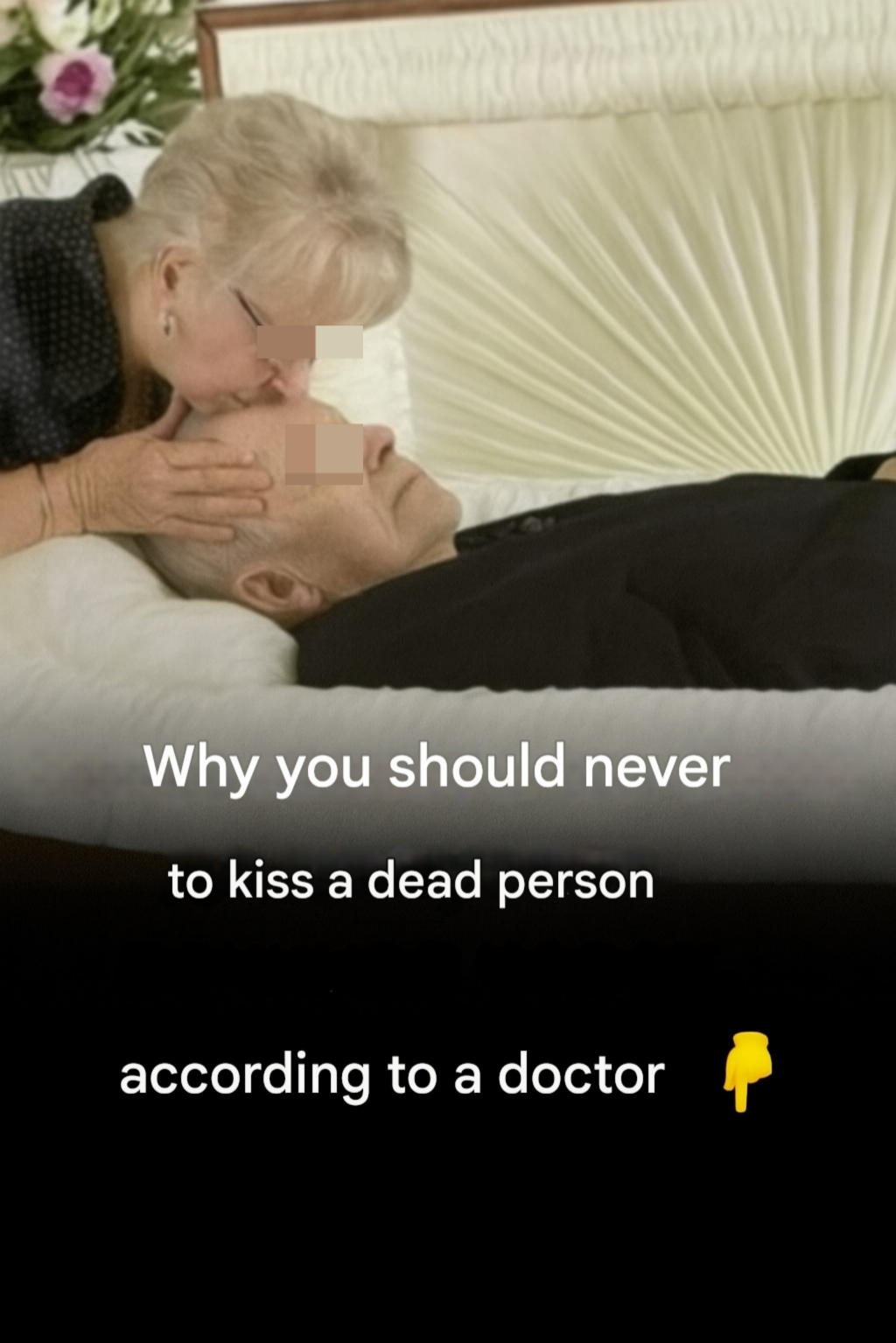
 Real cases of postmortem transmission
-
USA, 2017 – A man contracts hepatitis B after kissing his deceased relative.
-
An undertaker contracts tuberculosis as a result of contact with an unembalmed body.
-
During Ebola epidemics, direct contact with the deceased is strictly prohibited due to high contagiousness.
These cases are rare, but they demonstrate the need for awareness and precautions.
 The emotional significance of the final touch
Despite medical concerns, grief and palliative care experts emphasize the therapeutic value of physical contact with a deceased person.
“Sometimes seeing and touching the body helps people move from denial to acceptance.”
— Dr. Sarah Thompson, grief counselor
 How to honor your loved one safely
-
Talk to a funeral director or doctor
-
Ask about the cause of death and potential infections.
-
Find out if the body was embalmed.
-
-
Avoid direct contact with bodily fluids
-
If possible, use gloves or wet wipes.
-
Stay away from open wounds, nose, or mouth.
-
-
Wash your hands thoroughly.
-
Soap and water for at least 20 seconds.
-
Disinfectant in the absence of water.
-
-
Alternatives to saying goodbye
-
Hold hands instead of kissing.
-
Leave a flower or memento at the casket.
-
Light a candle, write a letter, observe a moment of silence.
-
-
Watch for symptoms
-
If you feel unwell in the days following the visit, inform a doctor and share the contact information.
-
 Cultural and religious practices
-
Islam – washing and separating the body from the family.
-
Hinduism – touching and carrying the body before cremation.
-
Christian and local traditions – saying goodbye with a kiss or touch as a spiritual act.
Medical advice must take into account cultural and religious sensitivities.

